In 1996, Robert H. Bork, a former United States Court of Appeals Judge, wrote a book, Slouching Towards Gomorrah: Modern Liberalism and American Decline. Judge Bork’s thesis in the book is that the moral culture of the United States in particular, and Western Civilization in general, is in decline. “The rough beast of decadence…now sends us slouching towards our new home, not Bethlehem but Gomorrah” (Soughing Towards Gomorrah). Judge Bork died in 2012, age, 85.
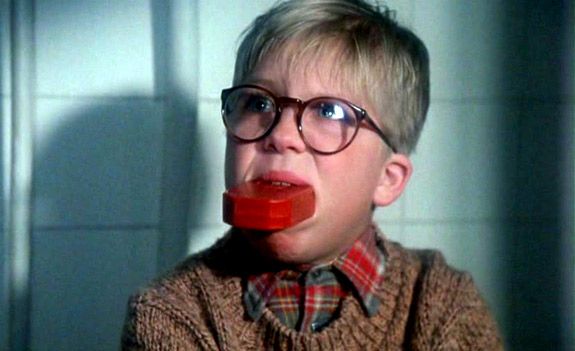
Were he alive today, Robert Bork might be recognized as a cultural Prophet, but without honor. The verbal, moral, and social decadence of which he warned is now fully entrenched in modern culture. One cringeworthy manifestation of cultural decadence is the widespread use, and justification, of profanity.
There is an increase of profanity being used on a daily basis by ordinary people.
“New research analyzing nearly 2 billion words from websites across 20 English-speaking countries reveals that Americans lead the pack in online profanity, outswearing even the Brits and Australians by a significant margin.
There is an increase of profanity being used in music.
In November 2019, Coldplay released their eighth album, Everyday Life. In twenty years of professional music, it was the first time that any of Coldplay’s records came with the famous “Parental Advisory” sticker. The whole of the album’s profanity came from three seemingly random “f-bombs.” Not only had Coldplay never had an explicit content warning on any album before. They had never even featured a single profanity on any of their full-length LPs before Everyday Life.
Less than a year later, Taylor Swift released Folklore. The same exact thing happened. Despite a 15+ year history of recording that featured zero strong profanity, Folklore earned the black and white sticker for featuring multiple uses of the f-word. This started a trend for Swift” (CHRISTIANITY TODAY Magazine).
There is a huge increase in curse words on TV shows.
“We’re seeing a big spike in the use of crude and profane language in movies and TV shows,” says Chad Michael, CEO of EnjoyMoviesYourWay.com, a content-filtering service for smart TVs. He adds, “As it increases, we become numb to it. And that gives writers and media [outlets] permission to add even more.”
Engineers at EnjoyMoviesYourWay.com deploy artificial intelligence to identify crude language in programming, allowing the app to filter thousands of titles. In an analysis for The Wall Street Journal, Enjoy scanned over 60,000 popular movies and TV shows released since 1985 and tracked the usage of “bleepable” words over time.
In the analysis, usage of the F-word went from 511 in 1985 to 22,177 through early November 2023. The S-word went from 484 in 1985 to 10,864 into November 2023. Of course, the explosion in expletives is also partly due to the sheer volume of programming that’s now available to viewers” (Beth DeCarbo, “What the! Everyone’s Cursing on the Screen,” The Wall Street Journal).
On September 13, 2016, TIME Magazine published an article, “What Profanity Teaches us about Ourselves.” The godless conclusion was predictable. Profanity is “driven by evolutionary old structures…. The time is right to capitalize on profanity to learn about language, not just as the rational product of deliberate reflection, but as part of the impulsive, emotional, hot cognition that is pervasively, if not uniquely, human” (TIME Magazine, Benjamin Bergen).
In sympathy with the belief that profanity is an evolutionary expression of rational behavior, CNN posted an article, “Why Swearing is a Sign of Intelligence” (Sandee LaMotte, January 26, 2021. After acknowledging that “polite society considers swearing to be a vulgar sign of low intelligence and education,” LaMotte contends that “swearing may be a sign of verbal superiority.”
While no memorable speech, or transforming document, in history is laced with vulgarity, LaMotte and company is convinced that profanity is natural, rational, reflects intelligence and displays verbal superiority.
In contrast to foolish worldly wisdom stands the Word of God, which condemns the use of profanity, and forbids a child of God using vile words.
“Let no corrupt word proceed out of your mouth, but what is good for necessary edification, that it may impart grace to the hearers” (Eph. 4:29, NKJV)
“But now you yourselves are to put off all these: anger, wrath, malice, blasphemy, filthy language out of your mouth” (Col. 3:8, NKJV).
“Out of the same mouth proceed blessing and cursing. My brethren, these things ought not to be so” (James 3:10-11, NKJV).
The Bible teaches speech should be respectful and uplifting. Profanity tends to shock, insult, and mock others. Profanity often produces anger in self, whiling displaying disrespect and hatred. Sometimes profanity reveals a need for medical attention due to lack of impulse control. Those who frequently use profanity manifest a harshness of tone and manner, which indicates a personality disorder of asperity.
While profanity may make a person feel more powerful, persuasive, intimidating, and authoritarian, it also diminishes godly character, kindness of heart, and gentleness of spirit.
Profanity must be viewed realistically and condemned as socially unacceptable. The word “coprolalia” adequately defines profanity. The Greek word kopros means “feces,” and lalia means “to talk.” When these two words are put together, a person who uses profanity is engaging in “feces talk.”
The idea of using “coprolalia language” should be so abhorrent to a Christian, they never again want to express a profane word.
For the Christian guilty of using profanity, if the Lord is gracious, there will be conviction, confession of this sin, and a renunciation of using that which grieves the Spirit, covers character with shame, and indicates a low intelligence, no matter what the actual IQ may be.
“Centuries ago, the psalmist offered a prayer that we would be wise to echo: ‘Set a guard, O Lord, over my mouth; keep watch over the door of my lips’ (Psalm 141:3). That prayer is needed today more than ever” (Dennis J. De Haan).
A thoughtful word, a sense of humor, or even silence is preferable to using profanity as a reprimand. When Peter cursed and denied knowing Jesus, the Lord looked at Him in sorrow (Matt. 24:74-75). The cock crowed, Peter was convicted, and the world learned the eternal shame of cursing because it leads to a denial of the Son of God who came to save us from our sins. Let holiness and wholesome words flow from the lips of a Christian, for their good, and God’s glory. Let the tongue of a born-again believer be used to speak of Christ and His great love.
“My gracious Master and my God,
assist me to proclaim,
to spread thro’ all the earth abroad
the honors of your name.”~Charles Wesley
 The Collected Works of Stanford E. Murrell