In Scripture, faith is not defined as much as it is modeled. Hebrews 11 has been called faith’s “Hall of Fame” as it enumerates what individuals did—by faith.
- By faith Abel offered to God a more excellent sacrifice than Cain.
- By faith Enoch was taken away so that he did not see death, and was not found, because God had taken him
- By faith Noah, moved with godly fear, prepared an ark for the saving of his household,
- By faith Abraham obeyed when he was called to go out to the place which he would receive as an inheritance. And he went out, not knowing where he was going.
- By faith Abraham dwelt in the land of promise as in a foreign country.
- By faith Sarah herself also received strength to conceive seed, and she bore a child when she was past the age.
- By faith Abraham, when he was tested, offered up Isaac, and he who had received the promises offered up his only begotten son.
- By faith Isaac blessed Jacob and Esau concerning things to come.
- By faith Jacob, when he was dying, blessed each of the sons of Joseph, and worshiped, leaning on the top of his staff.
- By faith Joseph, when he was dying, made mention of the departure of the children of Israel, and gave instructions concerning his bones.
- By faith Moses, when he was born, was hidden three months by his parents, because they saw he was a beautiful child; and they were not afraid of the king’s command.
- By faith Moses, when he became of age, refused to be called the son of Pharaoh’s daughter, choosing rather to suffer affliction with the people of God than to enjoy the passing pleasures of sin.
- By faith Moses forsook Egypt, not fearing the wrath of the king; for he endured as seeing Him who is invisible.
- By faith Moses kept the Passover and the sprinkling of blood, lest he who destroyed the firstborn should touch them.
- By faith the Exodus Generation passed through the Red Sea as by dry land, whereas the Egyptians, attempting to do so, were drowned.
- By faith the walls of Jericho fell down after they were encircled for seven days.
- By faith the harlot Rahab did not perish with those who did not believe, when she had received the spies with peace.
However, if a biblical definition is still needed, attention is turned to Hebrews 11:1. There we read, “Now faith is the substance [hupostasis, confidence] of things hoped for, the evidence [elengchos, proof that convinces] of things not seen. Albert Barnes reminds us, “There is scarcely any verse of the New Testament more important than this, for it states what is the nature of all true faith, and is the only definition of it which is attempted in the Scriptures.”
Barnes continues, “The Christian believes what God says. He has never seen heaven; he has never seen an angel; he has never seen the Redeemer; he has never seen a body raised from the grave—but he has evidence which is satisfactory to his mind that God has spoken on these subjects, and his very nature prompts him to confide in the declarations of his Creator. Those declarations are to his mind more convincing proof than anything else would be. They are more conclusive evidence than would be the deductions of his own reason; far better and more rational than all the reasonings and declarations of the infidel to the contrary. He feels and acts, therefore, as if these things were so-for his faith in the declarations of God has convinced him that they are so.”
Faith is not to be directed inward. Rather, faith looks outward, upward, and onward. There is no need to try to climb into heaven through asceticism, nor descend into hell through despair and self-loathing.
Simply stated, faith is believing a biblical promise. Faith is believing that God exists and rewards those who come to Him. Faith is counting the Bible to be true.
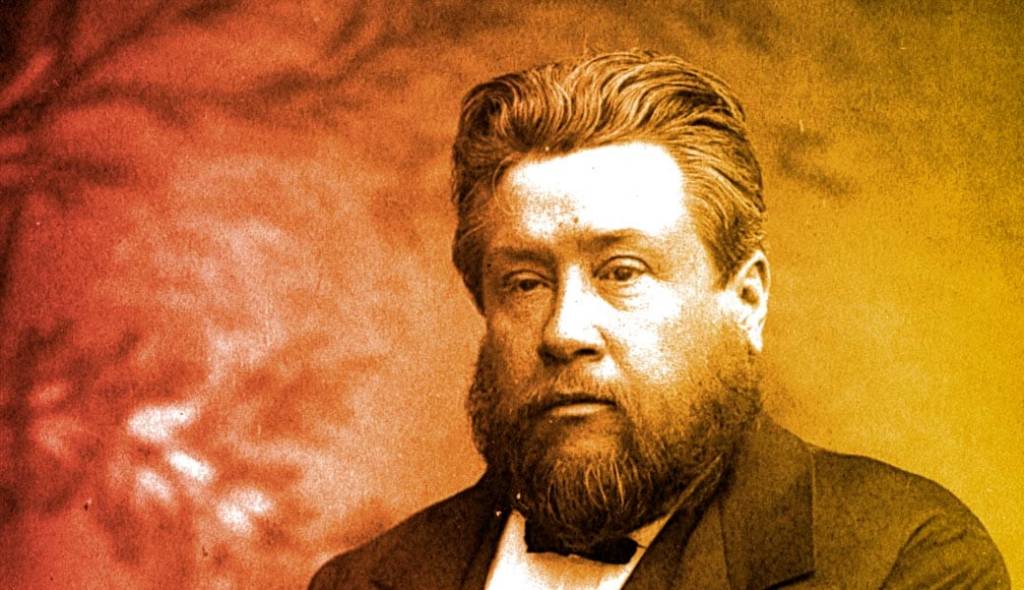
Countless men and women throughout Church history have exemplified the faith of which the Bible speaks. But sometimes certain individuals stand out for the way they demonstrated their faith through word and deed. We think of one particular man of the nineteenth century who believed with such unwavering resolve and tenacity that we honor his faith by remembering his work and seek to emulate his zeal for the Lord. That man was Charles H. Spurgeon.
In recounting the words of the prophet Isaiah from chapter 45, verse 22, which reads, “Look unto Me, and be ye saved, all the ends of the earth: for I am God, and there is none else,” Spurgeon reflects on his own journey in faith. Consider his own testimony.
This is the text that changed a man’s eternal destiny from hell to heaven, from eternal destruction to eternal glory in Christ. Read Spurgeon’s own words of how God’s providence and God’s grace intersected to save his soul forever…
In my conversion, the very point lay in making the discovery that I had nothing to do but To look to Christ and I should be saved. I believe that I had been a very good, attentive hearer; my own impression about myself was that nobody ever listened much better than I did.
For years, as a child, I tried to learn the way of salvation; and either I did not hear it set forth, which I think cannot quite have been the case, or else I was spiritually blind and deaf, and could not see it and could not hear it; but the good news that I was, as a sinner, to look away from myself to Christ, as much startled me, and came as fresh to me, as any news I ever heard in my life. Had I never read my Bible? Yes, and I read it earnestly.
Had I never been taught by Christian people?
Yes, I had, by mother, and father, and others.
Had I not heard the gospel?
Yes, I think I had; and yet, somehow, it was like a new revelation to me that I was to ‘‘believe and live.’’ I confess to have been tutored in piety, put into my cradle by prayerful hands, and lulled to sleep by songs concerning Jesus; but after having heard the gospel continually, with line upon line, precept upon precept, here much and there much, yet, when the Word of the Lord came to me with power, it was as new as if I had lived among the unvisited tribes of Central Africa, and had never heard the tidings of the cleansing fountain filed with blood, drawn from the Savior’s veins.
When, for the first time, I received the gospel to my soul’s salvation, I thought that I had never really heard it before, and I began to think that the preachers to whom I had listened had not truly preached it. But, on looking back, I am inclined to believe that I had heard the gospel fully preached many hundreds of times before, and that this was the difference,–that I then heard it as though I heard it not; and when I did hear it, the message may not have been any more clear in itself than it had been at former times, but the power of the Holy Spirit was present to open my ear, and to guide the message to my heart….
I sometimes think I might have been in darkness and despair until now had it not been for the goodness of God in sending a snowstorm, one Sunday morning, while I was going to a certain place of worship.
When I could go no further, I turned down a side street, and came to a little Primitive Methodist Chapel. In that chapel there may have been a dozen or fifteen people. I had heard of the Primitive Methodists, how they sang so loudly that they made people’s heads ache; but that did not matter to me.
I wanted to know how I might be saved, and if they could tell me that, I did not care how much they made my head ache. The minister did not come that morning; he was snowed up, I suppose. At last, a very thin-looking man, a shoemaker, or tailor, or something of that sort, went up into the pulpit to preach.
Now, it is well that preachers should be instructed; but this man was really stupid. He was obliged to stick to his text, for the simple reason that he had little else to say. The text was: –
LOOK UNTO ME, AND BE YE SAVED, ALL THE ENDS OF THE EARTH. ~Isaiah 45:22
He did not even pronounce the words rightly, but that did not matter. There was, I thought, a glimpse of hope for me in that text. The preacher began thus:
‘My dear friends, this is a very simple text indeed. It says, ‘Look.’ Now lookin’ don’t take a deal of pains. It ain’t liftin’ your foot or your finger; it is just, ‘Look.’ Well, a man needn’t go to College to learn to look. You may be the biggest fool, and yet you can look. A man needn’t be worth a thousand a year to be able to look.
Anyone can look; even a child can look. But then the text says, ‘Look unto Me.’ Ay!’’ said he, in broad Essex,
‘‘Many on ye are lookin’ to yourselves, but it’s no use lookin’ there. You’ll never find any comfort in yourselves. Some look to God the Father. No, look to Him by-and-by. Jesus Christ says, ‘Look unto Me.’ Some on ye say, ‘We must wait for the Spirit’s workin’.’ You have no business with that just now. Look to Christ. The text says, ‘Look unto Me.’ ‘‘
Then the good man followed up his text in this way: —
‘‘Look unto Me; I am sweatin’ great drops of blood. Look unto Me; I am hangin’ on the cross. Look unto Me; I am dead and buried. Look unto Me; I rise again. Look unto Me; I ascend to Heaven. Look unto Me; I am sittin’ at the Father’s right hand. O poor sinner, look unto Me! Look unto Me!’’
When he had gone to about that length, and managed to spin out ten minutes or so, he was at the end of his tether. Then he looked at me under the gallery, and I daresay, with so few present, he knew me to be a stranger. Just fixing his eyes on me, as if he knew all my heart, he said,
‘‘Young man, you look very miserable.’’
Well, I did; but I had not been accustomed to have remarks made from the pulpit on my personal appearance before. However, it was a good blow, struck right home. He continued, ‘‘and you always will be miserable—miserable in life, and miserable in death,—if you don’t obey my text; but if you obey now, this moment, you will be saved.’’
Then, lifting up his hands, he shouted, as only a Primitive Methodist could do,
‘‘You man, look to Jesus Christ. Look! Look! Look! You have nothin’ to do but to look and live.’’
I saw at once the way of salvation. I know not what else he said,—I did not take much notice of it —I was so possessed with that one thought. Like as when the brazen serpent was lifted up, the people only looked and were healed, so it was with me.
I had been waiting to do fifty things, but when I heard that word, ‘‘Look!’’ what a charming word it seemed to me! Oh! I looked until I could almost have looked my eyes away. There and then the cloud was gone, the darkness had rolled away, and that moment I saw the sun; and I could have risen that instant, and sung with the most enthusiastic of them, of the precious blood of Christ, and simple faith which looks alone to Him. Oh, that somebody had told me this before, ‘‘Trust Christ, and you shall be saved.’’…
Because faith is a divine gift, because faith is easy to do, it can be exercised at any time, anywhere, by anyone who will look to Jesus. Every day is the day of salvation. On any given day it can be said, “This man was born again there.” Time, distance, or place pose no barrier to faith.
The gift of faith is extended to every person. It is not a special saint that has faith. Faith is not reserved for monks or ministers, or Bible scholars.
Faith is a way of life, not a single act. The Christian is to be aware of the presence of God and to remember that we live and move and have our being in Him. Therefore, pray without ceasing. Love the Lord without ceasing. Obey the Spirit without ceasing.
Faith does not replace the other means of grace: personal Bible study, meditation, prayer, Church attendance, and Christian fellowship. But it does give purpose, meaning, and definition to all of life.
 The Collected Works of Stanford E. Murrell