As a person reads the Bible, they should be absolutely amazed at how relevant the Word of God is, which testifies to its divine origin. Consider, for instance, this passage from Ezekiel 18:19–20: “Yet say you, Why? Does not the son bear the iniquity of the father? When the son has done that which is lawful and right, and has kept all my statutes, and has done them, he shall surely live. The soul that sinneth, it shall die. The son shall not bear the iniquity of the father, neither shall the father bear the iniquity of the son: the righteousness of the righteous shall be upon him, and the wickedness of the wicked shall be upon him.”
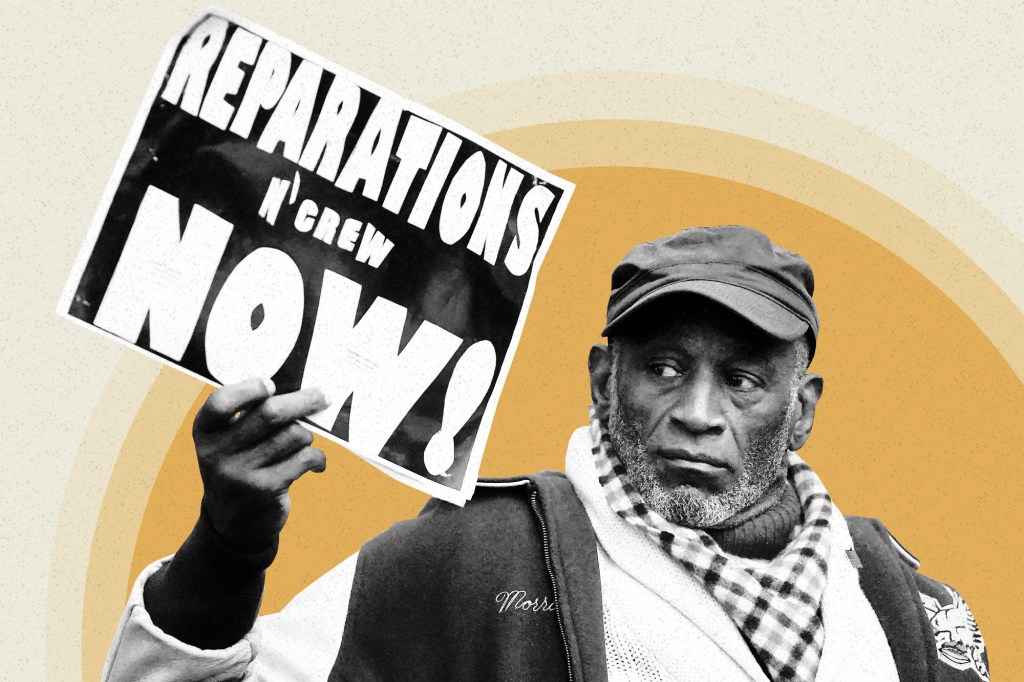
There is not a moral issue or a cultural behavior that has not been addressed in Scripture. A case in point is the current consideration of a racial reparation for the transgressions of former generations.
Fox News: Joshua Q. Nelson, March 28, 2026
Chicago Mayor Brandon Johnson is holding public engagement forums called Repair Chicago to gather lived experiences of harm of Black Chicagoans in an effort to provide reparations for Black residents.
Chicago took its first step after establishing a reparations task force two years ago [in 2024]. Now, Chicago Mayor Brandon Johnson plans to hold a public engagement forum called Repair Chicago to “gather lived experiences of harm of Black Chicagoans” in an effort to provide reparations for Black residents. “Your experience is evidence, and we’ve placed it at the center of our work,” Johnson said. “By engaging directly with residents, we are grounding this work in the voices and lived realities of the people it is meant to serve.”
Those who will be the recipient of a reparation check are excited about the prospect of receiving money they neither earned nor deserve. By accident of birth, they eagerly await something they are not entitled to, based on alleged social grievances committed in former generations.
Those who see the sheer madness of the proposal understand that every ethic group has been exploited at some point in history, so the black community is not unique. In a city facing a $150 million dollar deficit, reparation talk in Chicago is just another example of fiscal irresponsibility and cultural suicide. Such rhetoric pits one ethnic group against another and keeps dark passions stirred up that have nothing to do with how individuals are being treated in the modern era.
As a Christian, my own concern is to be guided on this issue by Scripture. When the Bible is opened, some basic principles emerge. One foundational principle is that the sins of the parents are not to be visited on the children. In the sixth century before Jesus, the prophet Ezekiel asked the question those opposed to generational reparation put forth:
“Why should the son bear the iniquity of the father when the son has done that which is lawful and right by everyone?”
“Why should individuals in the twenty-first century bear the iniquity of those who lived in a past century?”
To ask the question is to answer it.
“Millennials are the largest living adult age group in the United States. Born in 1981 or later, the some 74 million American millennials would have to go back at least five or six generations to find an enslaved person or slave owner in their lineage, if there were any at all.” (Ted Barrett, “McConnell Opposes Paying Reparations: ‘None of Us Currently Living Are Responsible’ for Slavery” (June 19, 2019), thehill.com)
In judgment day honesty, those who are seeking reparations are not seeking justice but political power, and free money for self and constituents, while enjoying a sense of being virtuous. But there is nothing noble, just, virtuous, or righteous associated with the concept of a monetary generational reparation.
The Biblical mandate is for every person to live a righteous life before God. That is reward enough.
Since it was wrong for white, black, and Asian slave owners to exploit workers, it is equally wrong to engage in a modern day political and economic exploitation of those who have labored and paid their taxes, only to have these resources confiscated by the underserving.
Individuals may need a hand up in life, but they do not need a handout whereby government becomes God.
Great African men like Booker T. Washington (1856–1915) emphasized self-help and economic independence over direct reparations. “Washington’s philosophy was rooted in the belief that hard work and self-sufficiency would lead to respect and equality. He argued that fostering economic independence was more beneficial than seeking reparations, which he viewed as potentially divisive and counterproductive.” (AI) Washington was not wrong. He was biblically correct. The story of Booker T. Washington is told in his auto-biography, Up from Slavery.
 The Collected Works of Stanford E. Murrell