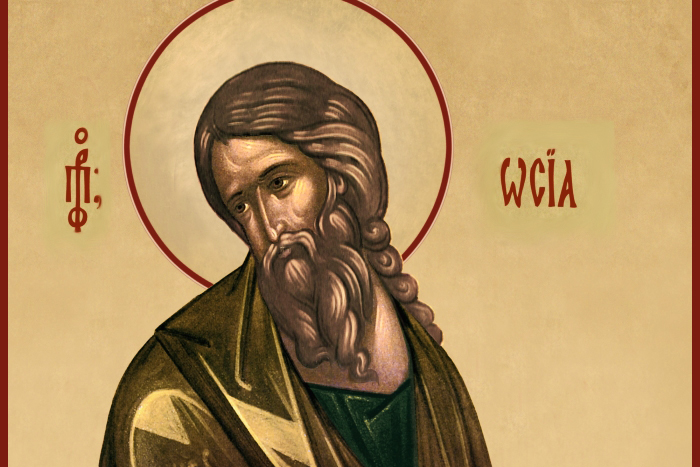
“The word of the Lord that came unto Hosea, the son of Beeri, in the days of Uzziah, Jotham, Ahaz, and Hezekiah, kings of Judah, and in the days of Jeroboam the son of Joash, king of Israel. The beginning of the word of the Lord by Hosea. And the Lord said to Hosea, Go, take unto thee a wife of whoredoms and children of whoredoms: for the land hath committed great whoredom, departing from the Lord. So he went and took Gomer the daughter of Diblaim; which conceived, and bare him a son. And the Lord said unto him, Call his name Jezreel; for yet a little while, and I will avenge the blood of Jezreel upon the house of Jehu, and will cause to cease the kingdom of the house of Israel. And it shall come to pass at that day, that I will break the bow of Israel, in the valley of Jezreel. And she conceived again, and bare a daughter. And God said unto him, Call her name Loruhamah: for I will no more have mercy upon the house of Israel; but I will utterly take them away. But I will have mercy upon the house of Judah, and will save them by the Lord their God, and will not save them by bow, nor by sword, nor by battle, by horses, nor by horsemen. Now when she had weaned Loruhamah, she conceived, and bare a son. Then said God, Call his name Loammi: for ye are not my people, and I will not be your God. Yet the number of the children of Israel shall be as the sand of the sea, which cannot be measured nor numbered; and it shall come to pass, that in the place where it was said unto them, Ye are not my people, there it shall be said unto them, Ye are the sons of the living God. Then shall the children of Judah and the children of Israel be gathered together, and appoint themselves one head, and they shall come up out of the land: for great shall be the day of Jezreel.” (Hos. 1:1-11)
The loving kindness of God is united to His loyal love, a love that will never leave nor forsake His own. Such love is unique to God, for human love is fickle. Music is written about abandoning a relationship. Country singer Tammy Wynette made the song “D.I.V.O.R.C.E” famous, having personally experienced five failed marriages. How sweet it is to know the faithfulness of God’s love.
The faithful love of God is expressed in the Hebrew word, “hesed.” This word has been translated as, “mercy,” “kindness,” “covenant love,” and, “loving-kindness.” Twenty-six times in the Authorized Version we read of God’s loving-kindness. The loyal love of God is a Covenant commitment designed to be a source of strength, comfort, and encouragement.
Because God is so loving, He expects individuals to reflect His essence. The prophet Micah asked, “What doth the LORD require of thee? (Mic. 6:8). The answer is that God expects individuals to act in a just manner, love mercy, by showing compassion and extending forgiveness, and walk humbly, by remembering one’s own need for grace and guidance.
This is what the Lord requires of people. When individuals do what is right, when they love mercy (hesed), and live in a humble manner, the hesed, the loving-kindness, the mercy of God, will be reciprocal. This is the basis for loyal love, one to another, man to God, and God to man.
One of the clearest expressions of hesed (loyal love, or, loving-kindness) is the relationship of the prophet Hosea to his wayward wife, Gomer. If ever a man showed loving mercy to a woman, it was Hosea. His story is told in the book in the Bible that bears his name.
The Message of the Book of Hosea
Turning to the book of Hosea, we find the prophet exercising his ministry in the role of a prosecuting attorney. Serious charges are being made by his client, the Lord God, against the defendant, the Northern Kingdom of Israel.
A subpoena has been issued from the Lord to the people who have betrayed Him. The charge is spiritual adultery. To adjudicate the case, the prophet calls a solemn assembly.
“Hear the word of the LORD, ye children of Israel: for the LORD hath a controversy with the inhabitants of the land…” (Hos. 4:1a).
God wants Israel to know He is angry and will judge them “because there is no truth, nor mercy, nor knowledge of God in the land” (Hos. 4:1b).
The people of Israel were not without spiritual guidance. They had Moses and the Law. The people were not without understanding. The Morality of God is written on every heart. The people were not without knowledge. Education was highly prized. The problem was that there was no truth in the knowledge the people lived by. So the people deceived themselves into believing they were good, and lied to one another.
We see this in the modern world.
People know that a man cannot be a woman. But individuals lie to one another and pretend that men are women. Why? Because there is no truth in their knowledge.
People know that marriage is between one man and one woman. But individuals lie to one another and pretend that a marriage exists in a homosexual union. There is no truth in their knowledge.
People know that a nation must have boundaries in order to exist. But individuals lie to one another and pretend that open borders without any vetting process is good for a nation. There is no truth in their knowledge.
People know that criminals should be arrested and punished. But individuals lie to one another and allow rapist, murderers, pedophiles, and drug addicts to freely prey upon society in the name of compassion. There is no truth in their knowledge.
People know that God exists. But individuals lie to themselves and say there is no God. The truth is not in their knowledge.
In the 8th century before Jesus, God had the prophet Hosea call a solemn assembly to tell the people they were lying to themselves, and to one another. There is no truth in their knowledge.
Where there is no truth, there will be no mercy. Where there is no mercy, there will be no loyalty. Where there is no loyalty, there will be no steadfast love. There will be no loving-kindness. Every person will do what is right in their own eyes. Every person will look out for Number One, meaning, themselves.
What was true in the 8th century before Christ is true in the 21st century after Christ.
We live in a world of self-interest, which is encouraged by the Church through Self-Esteem theology and feel-good sermons. The gospel of Christ has been replaced by another gospel, the gospel of self-reflection. The gospel message of Jesus has been lost that “salvation is free, but discipleship will cost you your life” (Dietrich Bonhoeffer).
The blast of a clarion gospel call needs to be sounded. The Church must remember.
“Christianity stands or falls with its revolutionary protest against violence, arbitrariness and pride of power and with its plea for the weak. Christians are doing too little to make these points clear, rather than too much. Christendom adjusts itself far too easily to the worship of power. Christians should give more offense, shock the world far more, than they are doing now. Christians should take a stronger stand in favor of the weak rather than considering first the possible right of the strong,” notes Dietrich Bonhoeffer.
The message of the modern gospel is cheap grace.
Bonhoeffer further writes, “Cheap grace is the grace we bestow on ourselves. Cheap grace is the preaching of forgiveness without requiring repentance, baptism without church discipline, Communion without confession….Cheap grace is grace without discipleship, grace without the cross, grace without Jesus Christ, living and incarnate.”
During the days of Hosea, when God looked for love in His people for Himself, and others, He did not find it. The people were too busy swearing, lying, killing, stealing, and committing adultery.
“Therefore, shall the land mourn” (Hos. 4:1).
God is not going to be mocked. His loving-kindness is not to be trampled on without repercussion. The land shall mourn (‘abal [aw-bal’], wail) “For the time is come that judgment must begin at the house of God: and if it first begin at us, what shall the end be of them that obey not the gospel of God?” (1 Pet. 4:17).
Why did this happen? In the 8th century BC, why was the land of Israel called to mourn?
The divine answer is given in Hosea 4:6, “My people are destroyed for lack of knowledge.”
When historians and sociologist inquire why a nation is destroyed, the divine perspective must not be overlooked.
It is God who destroys a nation. When God moves against a nation, the children suffer. “I will also forget thy children” (Hos. 4:6b).
In His wrath, God will use war, pestilence, famine, civil unrest, and economic collapse as instruments of judgment. There are several reasons why His wrath is displayed.
First, justice must be served. If righteousness exalts a nation, unrighteousness will destroy it.
Second, when a nation begins to mourn under the heavy hand of divine judgment, some people begin to repent. They want to turn from sin and seek a Savior.
Third, when justice is satisfied and individuals begin to repent, the loyal love of God can be displayed for God is a merciful God.
A Human Illustration
The loving-kindness and mercy of God is illustrated in, and displayed by His prophet Hosea, who also knew about betrayal.
The Bible says that Hosea married a woman, by divine command, who turned from the marriage bed to prostitution. His wife Gomer (lit. complete) committed physical adultery. Hosea was shocked that his beloved wife left him and their three children to enslave herself to a paramour. His story begins with these words.
“The beginning of the word of the Lord by Hosea. And the Lord said to Hosea, Go, take unto thee a wife of whoredoms and children of whoredoms: for the land hath committed great whoredom, departing from the Lord. So, he went and took Gomer the daughter of Diblaim; which conceived, and bare him a son. And the Lord said unto him, Call his name Jezreel; for yet a little while, and I will avenge the blood of Jezreel upon the house of Jehu, and will cause to cease the kingdom of the house of Israel” (Hos. 1:2-4).
The wife of Hosea was destined to illustrate the unfaithfulness of God’s people. The children of the prophet would be an omen for the terrible judgment to come.” Specifically, the N Kingdom of Israel was going to be destroyed. Many would be taken into captivity and dispersed among other nations.
The Story Continues
“And she [Gomer] conceived again, and bare a daughter. And God said unto him, Call her name Lo–ruhamah: for I will no more have mercy upon the house of Israel; but I will utterly take them away” (Hos. 1:6).
This was the suspension of hesed.
When a person is under God’s judgment, it seems as if He has deserted His people. Even Jesus, in His humanity, being crushed as a sin bearer cried out, “”Eli, Eli, lama sabachthani?” Meaning, “My God, my God, why hast Thou forsaken me?”
However, let no one be deceived. God will give a bill of divorcement to an adulterous people. “And I saw, when for all the causes whereby backsliding Israel committed adultery, I had put her away, and given her a bill of divorce; yet her treacherous sister Judah feared not, but went and played the harlot also” (Hos. 1:9, study Jer. 3:8-10).
A Surprising Twist in the Story
As God had a legal right to divorce adulterous Israel for spiritual unfaithfulness, so Hosea had a legal right to divorce Gomer when she left him to live with another man. But here is where the story takes a surprise turn.
Instead of allowing the prophet to divorce Gomer, God gave Hosea another astonishing command. “Go yet, love a woman beloved of her friend, yet an adulteress.”
Hosea was not to put his wife away forever, though he had every justification to do that. Rather, he was to show her steadfast loyalty, and loving-kindness, mercy without measure.
Hosea obeyed the Lord. He sought for Gomer and found her. She had enslaved herself to sin.
“So, I bought her to me for fifteen pieces of silver, and for a homer of barley, and an half homer of barley: And I said unto her, Thou shalt abide for me many days; thou shalt not play the harlot, and thou shalt not be for another man: so will I also be for thee” (Hosea 3:2-3).
Hosea was ordered to love and restore Gomer because God was going to do something with Israel, which the Law of Moses did not allow (Deut. 24:1-4). God was going to let a remnant of His adulterous people return to Him. He was going to show loyal steadfastness to Israel and loving-kindness (Hos. 3:1, 3). Notice the beginning of verse 3.
“Yet!” The word can be translated, “However!” What a lovely word. “Yet the number of the children of Israel shall be as the sand of the sea, which cannot be measured nor numbered; and it shall come to pass, that in the place where it was said unto them, Ye are not my people, there it shall be said unto them, Ye are the sons of the living God” (Hosea 1:10).
In time, those who were not His people (Lo-ammi) were to be called once more, “the sons of the living God.”
Oh, let the heart rejoice at such loyal love and repent so that hope can revive. “(For he saith, I have heard thee in a time accepted, and in the day of salvation have I succored thee: behold, now is the accepted time; behold, now is the day of salvation) (2 Cor. 6:2).
Hosea’s love for Gomer illustrates God’s loving-kindness for individuals throughout history and into eternity. The Lord is faithful. The Church rejoices and is comforted.
But Heed This Word of Warning
While hesed might be suspended for the people of God when they sin, hesed will be terminated for those who persist in their defiance of the divine. Unbeliever, beware, or you will hear God say, “Do you reject me? I reject you.”
One day Jesus pointed to a group of people and said to them, “You will not come to me, that ye might have life” (John 5:20). In that moment, their fate was forever sealed. There was to be no hesed for them. It is a terrifying state to be, by obstinate choice, outside the boundary of God’s mercy.
A Consistent Principle
The everlasting steadfast love of God, illustrated by Hosea, and promised by God the Father, is affirmed in the New Covenant in Paul’s Letter to the Romans.
“What shall we then say to these things? If God be for us, who can be against us? He that spared not his own Son, but delivered him up for us all, how shall he not with him also freely give us all things? Who shall lay anything to the charge of God’s elect? It is God that justifieth” (Rom. 8:31-33).
While the loyal love of God is not to be taken for granted, it is to be meditated. A prayer of thanksgiving is in order. The loving-kindness of the Father is just one of the gifts of God for the people of God. There is a love that will never let us go.
“O Love that will not let me go,
I rest my weary soul in Thee;
I give Thee back the life I owe,
That in Thine Ocean depths its flow
May richer, fuller be.O Light that foll’west all my way,
I yield my flick’ring torch to Thee;
My heart restores its borrowed ray,
That in Thy sunshine’s blaze its day
May brighter, fairer be.O Joy that seekest me through pain,
I cannot close my heart to Thee;
I trace the rainbow through the rain,
And feel the promise is not vain,
That morn shall tearless be.O Cross that liftest up my head,
I dare not ask to fly from Thee;
I lay in dust life’s glory dead,
And from the ground there blossoms red
Life that shall endless be.”~George Matheson
 The Collected Works of Stanford E. Murrell