It is not hyperbole or an exaggeration to say that the Bible is the most important book on planet earth. The Bible has held a place of pre-eminence in the affairs of men for many centuries. The Bible was written over a period of 1500 years (c. 1400 BC- AD 65) and involved 60 generations. There were 40 or more authors from every walk of life that contributed to the Bible. Its authors include the following:
- Moses, a political leader who had been trained in all the wisdom of Egypt;
- Joshua, a military genius, and successor to Moses;
- David, a ruler of Israel and the sweet singer of the Psalms;
- Amos, a herdsman;
- Nehemiah, a confidant of a king;
- Matthew, a tax collector;
- Luke, a doctor;
- Peter, a fisherman and;
- Paul, a rabbi.
Because of the different authors, the Bible was written in different places.
Moses wrote while wandering about in the hot dry desert.
David penned many of his Psalms while fleeing from his enemies.
Jeremiah recorded his thoughts while in a dungeon, as did the apostle Paul, who knew the stench and defilement of a Roman prison.
The apostle John was able to record his visions while suffering for the Savior on the isle of Patmos.
As the Bible was written in different places, it was written at different times.
David wrote in times of war, while his son Solomon wrote in times of peace.
Daniel wrote during the days of Israel’s national exile to the land of Babylon.
John Mark, and Luke, wrote during the exciting time of the growth of the New Testament Church under the Roman Empire.
Because of the personalities of the authors and their different circumstances, it is not surprising to read a manuscript that takes the soul from the heights of joy, to the depths of sorrow and despair, and back again. It is not surprising to read a Book that covers world history, and geography, while being sensitive to climate and culture.
In a supernatural and wonderful manner, the miracle of the Bible came into existence as God the Holy Spirit (2 Tim. 3:16) took those who knew Hebrew, Aramaic, and Greek from Asia, Africa, and Europe and recorded the greatest story ever told, God’s redemption of sinful men.
Hebrew was the language of the Old Testament (2 Kgs. 18:26-28; Isa. 19:18).
Aramaic was the language of the Near East, until the time of Alexander the Great, from the 6th to 4th BC.
Koine Greek was the international language at the time of Christ.
While the Lord was pleased to use human instruments to pen the passages, without violating their personalities, in the final analysis all Scripture is given by inspiration of God (2 Tim. 3:16). Men did not initiate the Bible, neither did they write of themselves. Men wrote by Divine commandment as they were moved by the Holy Spirit (1 Pet. 1:10, 12) so that every word, in every part of Scriptures, is God-breathed.
Technically this is called the Plenary (all) Verbal (very words) Theory of Inspiration. While the Bible was being revealed, written, and recognized, there was constant opposition to its composition and preservation, from natural and super-natural sources. Despite many challenges, the Bible has survived.
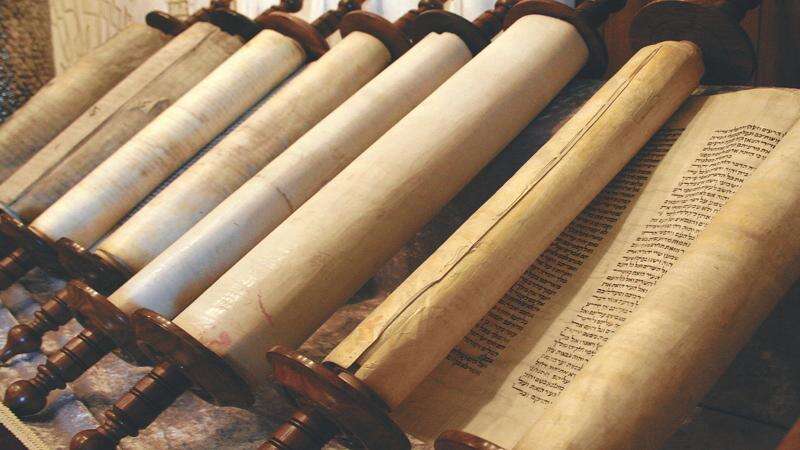
The Bible has survived the materials on which it was written which were perishable. This point is significant when it is realized how relatively few manuscripts exist from the ancient world. But the Jews preserved the Scriptures “as no other manuscript has ever been preserved…They kept tabs on every letter, syllable, word, and paragraph. They had special classes of men within their culture whose sole duty was to preserve and transmit these documents with practically perfect fidelity. These men were scribes (Masoretic) and lawyers.
In contrast, whoever counted the letters, syllables, and words of Plato or Aristotle, Cicero, or Seneca?” In regard to the New Testament [alone] there are about 13,000 manuscripts, complete and incomplete, in Greek and other languages, that have survived from antiquity.
No other work from classical antiquity has such attestation [documentation].” (Protestant Christian Evidences, Bernard Ramm)
Had the Bible perished as a book, like so many other manuscripts from the ancient world, it would have been understandable given the materials men had to work with. The most common ancient writing material was papyrus, made from the papyrus plant.
The papyrus is a tall reed that grew in the shallow lakes and rivers of Egypt and Syria. Clever individuals discovered, that if the reeds were cut, and dried, and woven together, the resulting white surface could be polished smooth with a stone, and the mat could be written on. A thriving industry developed for the sale and purchase of papyrus. Large shipments of this material went through the Syrian port of Byblos, which is where the Greek word for books (Biblos, Bible) originates.
Papyrus was highly valued because it was rare; it does not survive well except in dry areas like the sands of Egypt, or the Qumran caves where the Dead Sea Scrolls were discovered (between 1946-56). There were other writing materials in the ancient world.
Parchment was made from the shaved and scraped skins of sheep, goats, and antelope. It was written on with a pointed reed (6-16” long) dipped in liquid ink.
Vellum was made from calfskin that was often dyed purple and written on by gold or silver.
Ostraca refers to unglazed broken pottery. It was the poor man’s writing material.
Stones were often written on with an “iron pen” i.e., an iron instrument like a chisel.
Clay tablets were very popular for they could be engraved with a sharp instrument. Clay tablets are spoken of in Jeremiah.
“O Lord, the hope of Israel, all that forsake thee shall be ashamed, and they that depart from me shall be written in the earth, because they have forsaken the Lord, the fountain of living waters” (Jer. 17:13).
Ostraca is referenced in Ezekiel. “Thou also, son of man, take thee a tile, and lay it before thee, and portray upon it the city, even Jerusalem (Ezek. 4:1).
Wax tablets consisted of a flat piece of wood covered with wax.
A stylus was used to write with.
On these materials the Scriptures were preserved.
As the Scriptures have survived the perils of perishable material, so it has survived physical persecution. Some have tried to burn or ban the Bible, while others have tried to outlaw it from being read. Eusebius, “The Father of Church History” (AD 260-340) tells us that he, himself, witnessed the public burning of the Scriptures in the open market place of the city.
In AD 303 the Roman Emperor, Diocletian, issued an official governmental edict to destroy Christians, and their sacred writings.
“. . . an imperial letter was everywhere promulgated, ordering the razing of the churches the ground and the destruction by fire of the Scriptures, and proclaiming that those who held high positions would lose all civil rights, while those in households, if they persisted in their profession of Christianity, would be deprived of their liberty” (Cambridge History of the Bible).
At times, it seemed that those who hatred the Scripture would triumph, and the Bible would perish.
Sidney Collett in All About the Bible records that,
“Voltaire, the noted French infidel who died in 1778, said that in one hundred years from his time Christianity would be swept from existence and passed into history.” But what happened? “Voltaire has passed into history; while the circulation of the Bible continues to increase in all parts of the world, carrying blessing wherever it goes.”
With a touch of Divine humor, it is interesting to note that fifty years after the death of Voltaire, the Geneva Bible Society used his press, and his house, to produce Bibles!
While physical persecution of the Bible has been serious, perhaps the most destructive element launched against the Scriptures, has come in the form of criticism from within the Church.
Infidelity and skepticism united with German Higher and Lower Criticism to assault the Scriptures.
Higher Criticism concerns itself with literary and historical accuracy, while Lower Criticism concentrates on the detection and correction of textual corruption.
While there is a respected place for a careful analysis of these things, care must be taken that the integrity of the Scriptures is kept intact, and that the Word of God is not reduced to the random reflections of pious men.
Despite physical persecution from without the Church, and an intellectual assault from within, the Word of God still stands sure. Able men have arisen to defend the Bible against liberal biases such as the Documentary Hypothesis, which teaches that Moses could not have written the Pentateuch for writing was not in existence at that time.
The discovery of the Laws of the Babylonian ruler, Hammurabi (c. 1810 – 1750 BC) proved that writing was known prior to Moses, and even prior to Abraham. (c. 2,000 BC) Critics of the Bible have questioned its historical narrative in such matters as whether the walls of Jericho fell [they did; Josh. 5:13-6:27], or if the Hittite Empire was as great as the Bible suggests [it was; 1 Kings 10:29; 11:1 etc.].
The critics are always forced to retreat and regroup after considering objective facts. We say all of this to simply state that the Bible is not only interesting and unique, it is trust-worthy.
It can be believed. It has survived the test of time. An unnamed poet noted this and wrote,
“Last eve I stood before a blacksmith’s door
And heard the anvil ring its vespers chime;“Then looking in,
I saw upon the floor
Old hammers,
worn with beating years
of time.‘How many anvils have you had,’
said I,
‘To wear and batter
all these hammers so?’
‘Just one,’ he answered;
then, with twinkling eye,
‘The anvil wears the hammer out,
you know.’And so the Bible,
anvil of God’s Word,
For ages skeptic blows
have beat upon;And though the voice of
falling blow was heard,
The anvil is unharmed—
the hammers gone.”
The Bible will not go away, but it will transform individuals. “We see the events of history and the needs of the human heart sending men for strength and for guidance, for help and for comfort to the Word of God.” (William Barclay)
Considering this, it is proper to ask,
How did we get our Bible?
Perhaps a good place to begin might be in the later part of the 2nd century AD when the Bishop of Melito of Sardis (Turkey) was asked by a friend to provide “an accurate statement of the ancient books as regards their number and their order.” Melito honored the request, and drew up a list of the Old Testament books.
Except for Esther, his list is the same as that which is recognized today by the Jewish, and by the Protestant communities. But how was this Old Testament canon recognized and received? What process finalized it? Those who have studied this subject carefully, suggest several stages of historical development.
Stage One
In the initial stage, divine speeches and wise saying of those who were spiritual were preserved.
Included in this collection were the writings of God, and the writings of Moses.
According to Exodus 31:18 God wrote the Ten Commandments, with His own finger, in stone.
“These words the Lord spake unto all your assembly in the mount out of the midst of the fire, of the cloud, and of the thick darkness, with a great voice: and he added no more. And he wrote them in two tables of stone, and delivered them unto me (Deut. 5:22; Study Exodus 20:1-17).
The Lord then gave to Moses the rest of the Law.
Moses put into writing the sayings that were communicated to him (Ex. 20:1-23:33) and called it The Book of the Covenant which the people of Israel agreed to obey (Ex. 24:3-8).
Stage Two
With the passing of time, other books that recorded divine speeches and sayings of spiritual leaders were recognized as authoritative provided first, that they had a sense of the prophet voice, and second, they changed lives. If the text had a “Thus saith the Lord” quality to it, and if the writings were known to have changed lives, the work was set aside.
For example, what was preserved in Micah (who ministered c. 742 – 687 BC) 3:9-12, brought King Hezekiah (born c. 741 BC; ruled from 716 – 687 BC) to repentance, as per Jeremiah 26:17-19. In the year c. 625 BC a serious collection of sacred books began when workmen repairing the Temple made a great discovery. A copy of the Book of Deuteronomy was found. The ancient manuscript was read in public with the result being that the king, Josiah (640 to 609 BC), and all the people of Israel were brought to repentance (2 Kings 22-23). From that point on, greater care was taken to preserve and honor the Law of God.
Stage Three
To the Law (Torah) as formulated by the books of Moses, were added the Prophets (Nevi’im) and the Writings (Ketuvim). Concerning the Writings in particular, it must be acknowledged that “The Bible does not tell us who collected these books nor at what time they were gathered” (Edward Young). And, it does not matter, on one level, for the message is more important than the messenger.
Also, what must be remembered, for the conservative Christian, is that the canon of Scripture is not merely a list of books that the Jewish people came to regard as divine. To the Christian, the word ‘canon’ has a far higher connotation for it incorporates the inspired rule (standard) of faith and practice.
The writings of the Bible claim to be the Word of God, and their contents are in complete harmony with this claim. The Christian recognizes the Scriptures as inspired because they are authoritative, and bear in themselves the evidences of their divinity (Edward Young).The serious attempt to safeguard the Sacred Writings served the Jewish community well, especially in times of persecution such as the one instigated by Antiochus Epiphanes (c. 164 BC). The people of Palestine had a document to guide them as they rebuilt their lives, Word of God.
Stage Four
It is probable that a man named Judas Maccabeus and his associates (c. 167 – 160 BC) determined the final form of the Old Testament canonical books. The threefold division mentioned earlier of the Law, the Prophets, and the Writings, can be traced back to 180 BC when the Greek translation of certain books were written. Confidence in the 39 books of the Old Testament being the Word of God can be established easily enough. Simply put, they were honored by the time of Christ, apart from the Apocrypha ( a body of literature from which Jesus never quoted).
The Lord Jesus Himself recognized the familiar three-fold division of Law, Prophets, and Writings.
“And he said unto them, These are the words which I spake unto you, while I was yet with you, that all things must be fulfilled, which were written in the law of Moses, and in the prophets, and in the psalms, concerning me” (Luke 24:24).
It is right that the Protestant Bible does not have the Apocrypha in it so that nothing has been added to, or taken away from, the Word of God. What the Church can be confident is that God has preserved His Word, and the Old Testament canon of Scripture is the same as the canon used by Jesus during His ministry.

