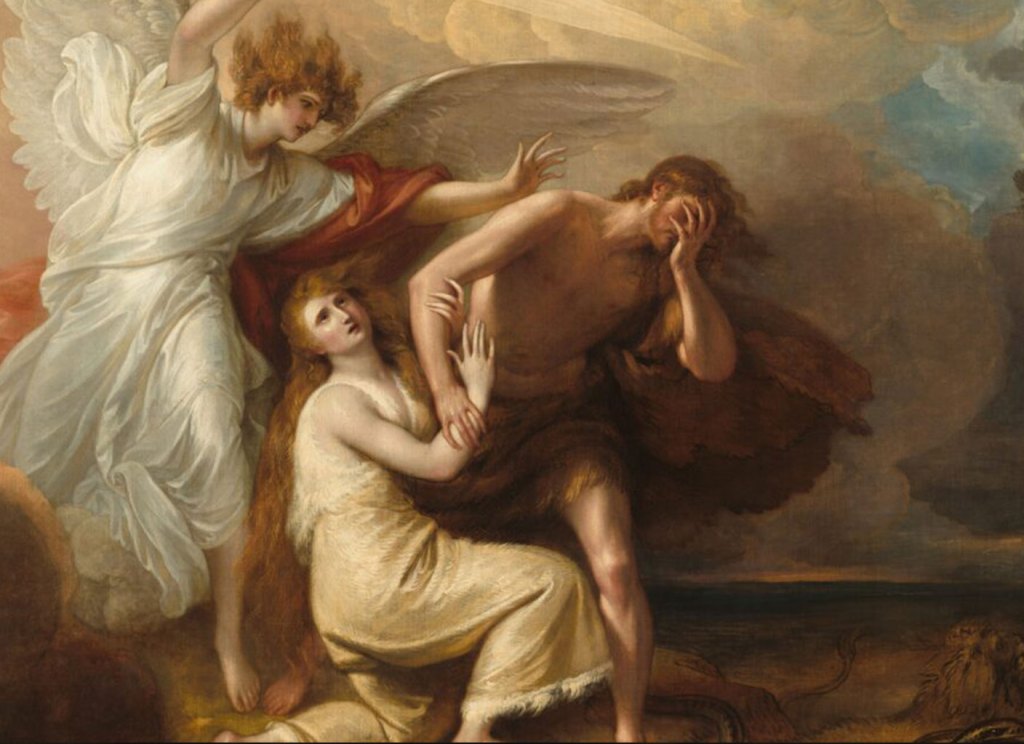
In 1618-1619 in the Dutch town of Dordrecht (English, Dordt), an important event took place in the history of the Church. A Synod was held to settle the concerns of a former professor, Jacobus Arminius (Oct. 10, 1560 – Oct. 19, 1609). His teachings would give rise to Arminianism.
Following the death of Arminius, his followers presented their objections to the Belgic Confession which sets forth the teaching of John Calvin, Theodore Beza, and their followers. It was in defense of the five Doctrines of Grace the anacronym T.U.L.I.P. was formulated to respond to the Remonstrance (the protesters).
Traditional Suggested
Total Depravity Radical Corruption
Unconditional Election Unlimited Grace
Limited Atonement Definite Atonement
Irresistible Grace Effectual Grace
Perseverance of the Saints Preservation of the Saints
Total Depravity
Historically, the letter T has stood for the Doctrine of Total Depravity, which may not be the best phraseology to convey what is being conveyed. A better term might be Radical Corruption to describe the desperate condition of the Natural Man, who is discussed in 1 Corinthians 2:14. “But the natural man receiveth not the things of the Spirit of God: for they are foolishness unto him: neither can he know them, because they are spiritually discerned.”
The Natural Man refers to the person who relies exclusively on their natural senses and intellect.
The Natural Man has no spiritual discernment, and cannot receive the things of God.
The Natural Man is contrasted in Scripture with the “Spiritual Man,” who is guided by the Holy Spirit through the Word of Truth.
Augustine and Pelagius
The importance of understanding the Radical Corruption of the Natural Man is rooted in the Doctrine of Salvation and the redemptive work of Jesus Christ at Calvary. In man is not depraved, but only damaged, then the need for salvation is not urgent, and the death of Jesus is minimized. This was the truth Augustine (Nov. 13, 354 AD – Aug. 28, 430 AD) argued for in his classics, Confessions, and, City of God.
Augustine felt compelled to defend the Radical Corruption of the human heart because a British monk and theologian named Pelagius (c. 354–418) protested against a written prayer whereby the Bishop of Hippo (Algeria) said, “Oh, God, command what Thou wouldst; and grant what Thou doest common.”
Pelagius had no problem affirming the sovereignty of God to command what He desires of His creation. However, Pelagius had great trouble with the request that God grant what He commands. Specifically, God commands men to believe on the Lord Jesus Christ and to be saved. God commands those who have trusted in Jesus to be holy. God commands men to truth and exercising faith.
Pelagius was convinced that what God commands men to do, they must be able to do in and of themselves. If a man is to believe on the Lord Jesus Christ, then his will must be free enough for that to happen. If a person is to be holy, then there had to be a way to comply with what God has instructed to be done.
Augustine was just as adamant that Free Grace triumphed over Free Will because the will of man would never seek to know God, or consciously obey Him.
“There is none that understandeth, there is none that seeketh after God” (Romans 3:11). The ability of man to change his nature is impossible. He needs a Savior. He needs Jesus.
“Can the Ethiopian change his skin, or the leopard his spots? then may ye also do good, that are accustomed to do evil” (Jer. 13:23).
Doctrine of Original Sin
The ideas which Augustine and Pelagius debated, are still emotionally debated today because there is no consensus on the seriousness of the Doctrine of Original Sin, which Biblical Theology affirms.
Ironically, the term “original sin,” does not refer to Adam’s first sin, but to the original state of his descendants at their birth. It is the consequence of Adam’s sin which is under discussion because every creed or confession in Church History acknowledges that something very serious happened when Adam sinned. The first sin produced original sin.
“Wherefore, as by one man sin entered into the world, and death by sin; and so death passed upon all men, for that all have sinned” (Romans 5:12).
The continuous debate is to what degree the sin of Adam has affected his prodigy. “Original sin has marred our nature. We are depraved. But how depraved are we? Are we simply less than perfect? What kind of improvement can we make within ourselves to change sin’s effect?” (Ligonier Ministries). This is the heart of the debate. “Behold, I was shapen in iniquity; and in sin did my mother conceive me” (Psalm 51:5).
David was not saying that his parents were engaged in a state of immorality when he was conceived. Rather, David was acknowledging that sin was in his very essence from the moment of his conception. Therefore, original sin has to do with the core (Latin, rodex; i.e. radical), fallen nature of a person (R. C. Sproul).
Reactions to Original Sin
There are several possible reactions to the Doctrine of Original Sin.
First, the Doctrine of Original Sin can be rejected. It can be argued that every person is born with a tableau rosa, a blank slate, on the soul. It is only when a person chooses to do wrong they become a sinner. No one is born a sinner, though every one does sin.
“We do not sin because we are sinners;
we are sinners because we sin.”
Second, the Doctrine of Original Sin can be can be confined to the idea that while the nature of man is fallen, it is not totally depraved. God has given to every person a measure of prevenient grace. This word from the Latin is used to describe the grace God gives which enables a sinner to exercise saving faith in Jesus Christ.
Third, the Doctrine of Origin Sin can be understood to mean that the nature of man is totally, and hopelessly, enslaved to sin by nature, and by choice, to the point he needs a Savior. The Natural Man has no innate ability to save himself, nor does he want to. Like a fish in water, like a bird in the air, the natural state of the Natural Man is to do what is right in his own eyes.
“We sin because we are sinners by nature.”
The Natural Man does not know God, need God, or desire God. Nor does the Natural Man believe he is a Radically Corrupted person. If there is a God, if there is a Day of Judgment, the Natural Man is convinced his good deeds will outweigh any wrong he has done in life. It is safe to say, if a national poll was taken, the general consensus would be that individuals are basically good, meaning the essence, or the core of a person is basically good.
The problem with this chartable view of the human condition is that sin is then seen as accidental, or peripheral, and not something that is an existential threat to the essence of the individual. An optimistic view of man might be politically correct, but it is biblically wrong.
What Total Depravity Does Not Mean
Once it is Scripturally concluded the Doctrine of Total Depravity adequately describes the desperate condition of the Natural Man, attention can be paid to what the teaching does not mean.
First, the Doctrine of Total Depravity does not mean every person is as bad as they could be. There are depths of sin which are deeper still. What is affirmed is that the Natural Man is utterly, or completely, depraved in his will, emotions, and intellect.
The Natural Man consistently wills to do that which is harmful to self and to others.
The Natural Man succumbs to inappropriate passions. The soul is in bondage; it is enslaved to the evil desires of the heart.
The Natural Man does not think in terms of justice and righteousness.
While no person is as bad as they could be, the Fall is so serious, so pervasive, so complete that it can be said the Natural Man is utterly depraved.
Second, the Doctrine of Total Depravity does not eliminate human dignity. It is because man is made in the image of God, it is because man is able to reflect divine attributes, it is because there is the possibility of being made a new person in Christ that every individual has a measure of value and dignity. Biblical theology embraces both human dignity and human depravity.
Third, the Doctrine of Total Depravity does not mean there is no hope. It is because God is capable of loving sinners that Jesus Christ came into the world to save sinners. Any sinner can be redeemed by the blood of the Lamb, and the power of the Holy Spirit, in the will of God the Father.
“There is no pit so deep, that God’s love is not deeper still.”
~Corrie ten Boom
It is not social optimism that a person needs, but the new birth. All the self-help books, all of the government programs to make people better, are to no avail. Only the blood of Christ can cleanse the heart (core) and make Him free from the tyranny of his Radical Corruption.
“We have heard the joyful sound:
Jesus saves! Jesus saves!
Spread the tidings all around:
Jesus saves! Jesus saves!Bear the news to ev’ry land,
Climb the steeps and cross the waves;
Onward! ’tis our Lord’s command;
Jesus saves! Jesus saves!”
~Priscilla J. Owens
 The Collected Works of Stanford E. Murrell